In April 2004, Shell explained why it was selling its 50 per cent interest in BP-operated Block 18 offshore Angola. “We don’t have critical mass in Angola,” a company spokesman said. The proposed transaction valued the interest at around $600 million and formed part of a broader retreat from a country where Shell had never built the position enjoyed by BP, Total, ExxonMobil or Chevron. Angola, however, was about to enter the most productive period in its petroleum history. Total’s Dalia, BP’s Greater Plutonio and ExxonMobil’s Kizomba developments helped push crude production towards 2 million barrels a day by 2008.
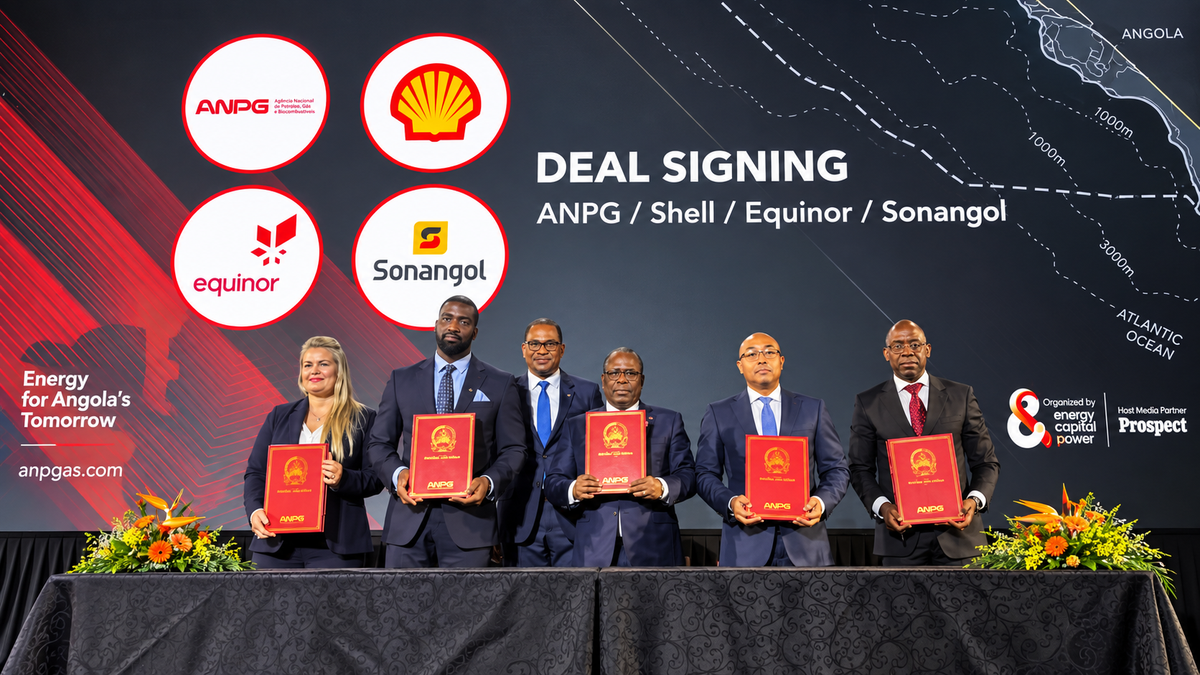
More than two decades later, Shell is coming back. The company has been rebuilding an Angolan exploration position alongside Equinor and Sonangol, initially through studies covering a broad spread of deep and ultra-deepwater acreage. An agreement reached in late 2025 set out a route towards 17 risk-service contracts, and in September 2026 the first contracts covering Blocks 19, 34 and 35 were formally signed. Shell has also agreed to take 35 per cent interests in Chevron-operated Blocks 49 and 50. None of these positions yet provides meaningful production, but together they represent a remarkable reversal from the company that once concluded Angola lacked sufficient critical mass.
Shell is only part of a broader movement. TotalEnergies is investing in large new deepwater developments while still finding rapid tie-back opportunities around its producing hubs. Chevron is making new discoveries in acreage it has operated for decades while transferring mature assets to new owners. ExxonMobil is extending the productive life of Block 15 and still finding hydrocarbons in a concession that has already produced billions of barrels. Azule Energy (BP and Eni) is developing large oil projects and Angola’s first major non-associated gas development. Below them, Afentra, Etu Energias, BW Energy, Chariot, Corcel and Sintana are approaching the same petroleum system from very different directions.
Angola’s first great offshore cycle was built around giant deepwater discoveries, expensive new production systems and some of the world’s largest international oil companies. Production rose rapidly after the end of the civil war and reached around 2 million barrels a day in 2008. Those fields subsequently matured and national output fell almost continuously, reaching roughly 1.1 million barrels a day by 2025. The government’s immediate objective is closer to stabilising production around 1 million barrels a day than recreating the peak of almost two decades ago.
Natural decline accounts for much of that fall, but the resource base aged during a period in which exploration slowed, investment in mature fields became harder to justify and Angola’s institutional structure became increasingly cumbersome. Sonangol historically combined the commercial role of national oil company with the concessionaire function through which access to petroleum resources was managed. In 2019 the government created the Agência Nacional de Petróleo, Gás e Biocombustíveis, or ANPG, and transferred the concessionaire role away from Sonangol.
A multi-year licensing programme followed, together with a permanent-offer system that allowed acreage to remain available outside conventional bid rounds. In 2024 Angola added a fiscal and legal framework designed specifically to encourage incremental production from mature offshore blocks and undeveloped discoveries. By then the country had accumulated decades of seismic data, discovered resources, production facilities, pipelines and offshore infrastructure. Increasingly, the commercial problem was not simply finding hydrocarbons but getting the next barrel to compete successfully for capital.
Angola’s departure from OPEC at the beginning of 2024 fitted the same direction of travel. Leaving the organisation did not create additional productive capacity, and output continued to decline afterwards, but the country no longer wanted its ambitions constrained by a quota built around a shrinking production base.
The reforms have arrived just as the international upstream industry has begun to change again. The exceptional growth delivered by US shale is becoming harder to replicate, while the larger international companies need resources that can support production well into the 2030s. Deepwater exploration has consequently moved back towards the centre of industry thinking, from Guyana and Brazil across the Atlantic margin into Africa. Angola has made itself easier to invest in at almost exactly the time companies have started looking harder for new resources.
The breadth of activity is more interesting than the headline investment numbers. TotalEnergies’ Kaminho project in the Kwanza Basin is a multi-billion-dollar development expected to produce around 70,000 barrels a day from 2028 and requiring substantial new infrastructure. Acacia-5 on Block 17 is almost the opposite kind of project. Discovered in June 2026, it is expected to move to production within only three months by using spare capacity on the Pazflor FPSO, adding around 6,000 barrels a day. TotalEnergies has also taken additional exploration acreage nearby. The company can therefore pursue a major new deepwater development, rapid infrastructure-led tie-backs and fresh exploration within the same country.
Chevron’s recent Block 0 discovery illustrates the enduring value of an established operating area. The 105-4X well encountered more than 90 metres of net pay within a hydrocarbon column exceeding 600 metres, and Chevron is assessing whether it can be tied back to nearby facilities. Block 0 has been producing for decades, but processing capacity, pipelines and subsea infrastructure can make discoveries economic that might struggle to support a standalone development elsewhere.
ExxonMobil is extending the same logic across Block 15. The concession has already produced more than 2.5 billion barrels, yet licences and facilities are being extended, new resources are being connected and exploration continues. The Vicango Este-01 discovery announced in September was the twentieth discovery on the block in thirty years and the third in four years. Decades of subsurface knowledge and installed infrastructure have changed the economics of what remains.
Azule Energy occupies a particularly interesting position in the middle of this transformation. Created by combining BP and Eni’s Angolan businesses, it inherited the scale and technical capability of two majors but is deliberately concentrated on Angola and this part of West Africa rather than competing for capital inside two enormous international portfolios.
Its Agogo Integrated West Hub started production in 2025, only 29 months after final investment decision. Agogo and Ndungu together represent a substantial resource base, with peak production expected to reach around 180,000 barrels a day. Azule has followed that with Greater PAJ, a development spanning Blocks 31 and 31/21 around a new FPSO capable of producing 95,000 barrels a day, with first oil expected in 2029.
Gas broadens the portfolio further. Azule operates the New Gas Consortium, which has begun delivering gas from Quiluma. It is Angola’s first major development focused on non-associated gas rather than gas produced alongside oil, supplying Angola LNG and the domestic market. Azule increasingly looks less like a repository for mature BP and Eni assets and more like a concentrated Angolan upstream company able to move between large new oil developments, brownfield opportunities and an emerging gas business.
The smaller companies reveal another part of the change, and Afentra is particularly interesting because its investment proposition gives public-market investors a very different way to participate.
Afentra’s principal producing exposure is a 30 per cent non-operated interest in Block 3/05 and a 21.33 per cent non-operated interest in adjacent Block 3/05A, with Sonangol operating Block 3/05. These are mature producing assets, so the opportunity is less about finding another giant field than extracting more value from an established resource base through renewed investment, better utilisation of existing infrastructure and selective redevelopment.
Afentra has been one of the clearest corporate beneficiaries of Angola’s upstream revival. Originally Sterling Energy, the company was relaunched in May 2021 under its current management and new name with a strategy focused on acquiring mid- and late-life producing assets and discovered resources in Africa as international oil companies reshaped their portfolios. West Africa was an early focus, with both operated and non-operated opportunities considered from the outset. Within five months, Afentra had submitted an expression of interest for Sonangol’s interests in Block 3/05 and Block 23.
The strategy was led by CEO Paul McDade, who spent nearly two decades at Tullow Oil, culminating in his appointment as CEO in 2017. Just as important for Afentra was the network of relationships he had built across African governments, national oil companies and the wider upstream industry; particularly valuable for a business whose growth depends on identifying assets, negotiating acquisitions and working alongside existing operators.
Angola was already reforming its petroleum sector when Afentra arrived, while oil prices were recovering from the disruption of 2020 and investor interest in conventional upstream assets was beginning to return. Whether through foresight, timing or some combination of the two, Afentra found itself in the right place at the right time, with a strategy well suited to the structural transfer of African petroleum assets that followed.
Afentra does not operate the redevelopment work on Block 3/05. It has assembled a material economic interest in assets where renewed investment and drilling can unlock value while Sonangol executes the operating programme. Fields that would barely register inside a supermajor portfolio can have a material effect on Afentra’s production, reserves, cash flow and ultimately its equity value.
For investors, Afentra offers something very different from the majors. TotalEnergies, ExxonMobil and Chevron all have substantial interests in Angola, but the performance of an individual Angolan asset is unlikely to move the needle materially for their shareholders. Afentra provides a much more concentrated way to participate in the country’s upstream revival.
That concentration brings more risk, but also more potential impact on the equity. A successful redevelopment, reserve addition or production increase can matter to Afentra in a way it simply cannot to a supermajor. For investors looking for a more direct and higher-beta exposure to Angola, that makes the company particularly interesting.
The rapidly changing ownership of Blocks 14 and 14K provides another version of the same opportunity.
Blocks 14 and 14K have also attracted considerable recent interest. Azule initially agreed to sell its stakes to BW Energy and Maurel & Prom, before existing partner Etu Energias exercised its pre-emption rights. A few months later, Energean agreed to acquire Chevron’s interests in the same blocks, only for Etu to pre-empt again and move to consolidate a much larger position.
BW Energy, Energean and Chariot have therefore all sought exposure to the assets, while Etu is emerging as the central Angolan owner. BW Energy and Chariot are now working alongside Etu, providing technical and operational support with the prospect of economic participation in future cash flows. For BW Energy, the opportunity fits closely with its existing model of working with mature production, discovered resources and established infrastructure. For Chariot, it offers a route to production-linked exposure alongside its more exploration-heavy portfolio.
Further down the spectrum, Corcel and Sintana are preparing to test the onshore Kwanza Basin. Corcel has completed new 2D seismic across KON-16 and is preparing for a targeted pre-salt exploration well in 2027, while Sintana has agreed to acquire an indirect interest in the block. This is a very different proposition from mature producing Block 14 or Afentra’s redevelopment exposure: conventional early-stage exploration, with correspondingly higher geological risk and upside.
Angola can now accommodate all of these approaches simultaneously. Kaminho and Greater PAJ are large developments capable of supporting significant new infrastructure. Around established production hubs sit discoveries such as Acacia-5, Vicango Este and Chevron’s Block 0 well, where existing facilities can shorten development schedules and reduce capital requirements. Mature producing systems such as Blocks 3/05 and 14 are attracting smaller international companies and increasingly important Angolan owners. Gas is creating another commercial route through existing LNG infrastructure, while onshore and ultra-deepwater acreage offers exposure to a new generation of exploration risk.
The first great Angolan oil boom was dominated by fields large enough to justify bespoke FPSOs and billions of dollars of spending. It produced extraordinary growth, but it also left the country vulnerable once those developments matured and the next investment cycle failed to arrive quickly enough. The industry taking shape today is more layered. Existing facilities can turn relatively small discoveries into useful projects. Mature fields can migrate towards owners for whom incremental production is financially meaningful. Large discoveries can still justify entirely new development systems, while frontier acreage remains available to companies willing to accept geological risk.
Angola’s institutional reforms did not create those hydrocarbons. They altered the commercial environment through which capital can reach them. The breadth of companies now willing to commit money says more about the success of that process than any headline target for future investment.
Existing fields will continue to decline. Some exploration wells will fail. Mature offshore facilities require continuing expenditure, several announced transactions have yet to complete and higher oil prices improve almost every upstream investment case. There is little reason to assume Angola will simply retrace its production history and return to 2 million barrels a day.
Twenty-two years ago Shell concluded that Angola did not provide enough critical mass to justify its investment. Today it is rebuilding an exploration position in a country where TotalEnergies is sanctioning large deepwater projects and rapid tie-backs, Chevron is still finding oil while transferring mature assets to new owners, ExxonMobil is extending fields that have already produced billions of barrels, Azule is developing oil and gas at scale, and a growing collection of smaller companies is finding different ways to participate further down the asset base.
Angola has not made its oilfields young again. It is assembling an industry capable of keeping mature fields working, moving assets towards owners for whom they matter, exploiting infrastructure installed during the first oil boom and creating room for another generation of exploration.
For investors, the change opens up something that barely existed during Angola’s first great offshore cycle. Exposure no longer has to come through a handful of global majors. It can sit at different points along the upstream chain: diversified international companies spending billions of dollars on large developments, focused Angolan operators consolidating mature assets, specialist independents pursuing discovered resources and existing infrastructure, listed companies such as Afentra offering concentrated redevelopment exposure, or small explorers taking direct geological risk.
Angola probably won’t return to 2 million barrels a day, but it may be building something more durable: an upstream industry capable of creating value at every stage of a basin’s life, while steadily rebuilding the reserves that ultimately sustain it.