Noble Energy and Delek dramatically changed Israel’s upstream industry in 2009 when Tamar was discovered in the deepwater East Mediterranean, proving that the country had giant domestic gas resources. Leviathan followed in 2010 and made the prize larger still. Noble brought deepwater exploration and operating capability. Delek was a key local partner. Within a few years, Israel had moved from being an energy importer with limited domestic production to a country with a serious offshore gas resource base.
These were deepwater discoveries, but they were not exotic or especially challenging from a subsurface perspective. By then, the industry knew how to drill and develop gas fields in these water depths. The reservoirs were high-quality sands, the gas was largely dry and biogenic, and the fields had the scale and deliverability to support a clear development concept. Someone described them to me at the time as “easy”. I would not go that far, because deepwater projects are never easy in an absolute sense, but the point was real. Multi-Tcf dry gas in clean, Darcy-quality sands, with no obvious reservoir complications, is extremely rare. Add a large local market dependent on imports, and the prize was not just technically attractive; it was also very lucrative.
Success created a different problem. Noble and Delek had opened the basin, but they had also become too important to the emerging domestic gas market. Israel needed another E&P company. It needed another supplier, another operator and another source of competition. Karish and Tanin became the answer.
Tanin and Karish were discovered in 2012 and 2013 by Noble Energy, this time alongside local partners Delek Drilling and Avner. They were smaller than Tamar and Leviathan, but that is only a relative statement. They were still substantial discoveries by normal upstream standards: Tcf-scale fields in a newly proven offshore province. They were already discovered, material and undeveloped. That made them ideal assets through which a new entrant could be brought into Israel’s gas market without asking that entrant to take the original basin-opening exploration risk.
Energean was a convenient vehicle for that next phase. It was not Israeli in the same way Delek was, but it was regional, Mediterranean and already an operator. It was small enough to be transformed by Karish and Tanin, but credible enough to take them on. It also had the commercial mindset required for the problem Israel now needed solved: finance the development, sign the contracts, build the project and turn discovered gas into production.
Energean itself began in a much smaller place. It was a Mediterranean upstream business built around Greece and the Prinos field, operating in a part of the industry that rarely attracts much public-market attention. Prinos gave Energean a base, an operating history and a local identity. It did not, by itself, give the company the scale or the capital-market story that later came to define it.
Karish and Tanin changed the company. Energean acquired them in 2016 and moved from a small Greek starting point into the new Israeli gas economy. The basin had already been proven. The fields had already been found. Israel wanted more domestic supply competition. Gas buyers existed. Long-term contracts could be signed. Energean’s opportunity was not to discover a basin. It was to take discovered gas, create a financeable development around it, and build a company around the cash flows that could follow.
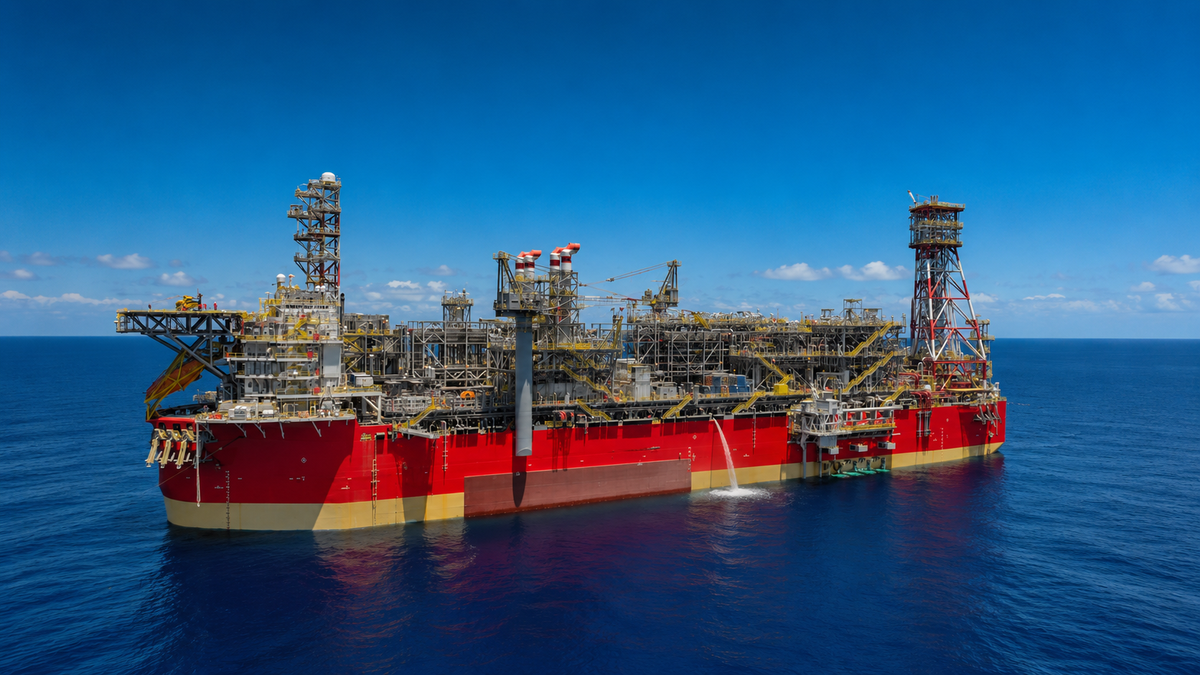
Karish was not easy in the ordinary sense. It required a deepwater development, subsea wells, a floating production facility, project finance, gas contracts, government approvals, security management and a new commercial position in the Israeli market. That is a lot for any independent, but it was the kind of hard that Energean was suited to solve. The reservoir risk had already been reduced by the earlier discoveries. The gas had a market. The development could be contracted. The commercial problem was difficult, but it was legible.
The important point is that Energean’s success was not a general lesson in how any upstream asset can be turned into a capital-markets product. It was much more specific than that. Energean used Israeli gas demand, Israeli contracts and Israeli capital markets to fund the development of Karish. That is not a criticism. It is the achievement. The company found the setting where its commercial skill mattered most: discovered gas, a domestic market that needed supply, buyers willing to sign long-term contracts, and a capital market prepared to finance the cash flows.
The London IPO in 2018 helped create the public equity story, but the centre of gravity was always Israel. Investors were not buying a broad international E&P company. They were buying a very specific idea: discovered East Med gas, Israeli demand, long-term contracts, founder-led management, project finance and future dividends. It was a cleaner story than most small E&P companies can offer, because the central upstream question had already been narrowed. The gas was discovered. The market existed. The challenge was execution, financing and delivery.
An investor who bought at the IPO and held through the dividends has done well, even after the recent share-price weakness. Energean is therefore not a simple case of failed ambition or promotional excess. The company created value. It built something real. It took an asset base that could have remained undeveloped and turned it into a producing business with scale, contracts and cash returns.
The dividend was part of that story from the start. Energean did not ask investors to wait indefinitely for value. It presented itself as a company moving from development into cash generation, and then into cash returns. That helped separate it from development-stage E&Ps that often need the next equity raise, the next farm-out or the next refinancing before shareholders see anything back. Energean was offering something more direct: Israeli gas, contracted cash flow, founder alignment and visible returns.
For a period, the market rewarded that combination. Karish was being de-risked, European gas markets were strong, the company was moving from development into production, and dividends began. The equity looked like a successful founder-led upstream story, but the real appeal was narrower and more powerful than that. Energean had created a way for public-market investors to own Israeli contracted gas cash flow.
Karish was the first stage. Karish North, Katlan and eventually Tanin are the next test. These are not distractions from the Energean story. They are the story. The company is not simply waiting for Karish to decline. It has more discovered Israeli gas to develop around an existing offshore system, in a basin it knows, with infrastructure already in place and a market that still needs supply.
That is the bull case, and it should be taken seriously. If Energean can repeat the Karish logic, the equity story can improve. More Israeli gas can extend the life of the FPSO, support contracted volumes, increase cash flow, reduce leverage and protect the dividend model. It would show that Karish was not a one-field success but the first part of a larger Israeli gas cash-flow story.
The second time is harder. The first Karish development created the equity story. The next phase has to repair and extend it. Energean now has more debt, a lower share price, less market patience, a reduced dividend, visible country risk and a market that has already seen Israeli production interrupted. Capital that was available when Karish was being built may not be available on the same terms today. Investors who were willing to underwrite promise may now want cash flow, deleveraging and proof.
That is where the balance sheet becomes a concern. Energean ended 2025 with net debt of about $3.3bn and leverage just under 3x. After the Q1 2026 Israeli shutdown, leverage moved above 3x. That does not automatically make the company distressed, and it does not mean the issue is a simple near-term maturity wall. But that is too low a bar. An investor looking at the company may still conclude that Energean is running out of room.
That does not have to mean the company is about to run out of money tomorrow. It can mean something more subtle. Katlan needs capital. Israeli interruptions reduce cash flow. Interest has to be paid. Leverage has to come down. The dividend model still matters. The non-Israel portfolio has not created a second Karish. If too many of those demands collide at once, the company may have to sell assets, cut distributions, slow projects or accept a less attractive financial structure than the equity story originally implied.
The issue is not simply that Energean has debt. Debt helped create the company investors now own. The issue is that debt changes the tolerance for delay and interruption. Karish North, Katlan and Tanin do not merely have to be good assets. They have to arrive in time, convert into cash flow and support a balance sheet that no longer has unlimited room for disappointment. The rock, the reservoir and the timetable now matter more because the financial structure gives them less room to be late.
Israel is therefore both the answer and the risk. More Israeli gas may be the highest-return route available to Energean. It uses the company’s existing infrastructure, market position, gas buyers and knowledge of the basin. It is where Energean has already proved it can create value. But it also deepens the same concentration that worries the market. The solution to the equity problem may be more Israeli gas, but more Israeli gas also means more exposure to Israeli country risk.
The share-price decline cannot be explained only by saying “Israel risk.” Israel risk is important, and the production interruptions made it visible. The more precise point is that country risk, like it or not, has become the equity story. Energean is not a diversified major with Israeli exposure. It remains a concentrated Israeli gas business with a smattering of assets elsewhere. If the Israeli hub runs smoothly and the next developments arrive, the structure can work. If the hub is interrupted, or if the next phase slips, the rest of the portfolio does not yet carry enough weight to change the story.
That should not automatically make the equity unattractive. Concentrated country-risk equities can be very good investments if the market prices the risk properly and if management accepts what the company is. The problem comes when a company wants the valuation of a stable contracted cash-flow business, the strategic language of a diversified E&P, and the dividend expectations of an income stock, while the actual business remains a leveraged upstream company concentrated in one country.
The cleaner answer may be to accept the concentration rather than disguise it. Energean’s most valuable assets are in Israel. Its best organic developments are in Israel. Its dividend model depends mainly on Israeli cash flow. The company should therefore be judged primarily as an Israeli gas cash-flow and dividend story, not as a broad international E&P platform.
The Edison acquisition shows why. Completed in December 2020, it broadened Energean, but only after the original transaction had been heavily reshaped. Algeria was excluded when the transfer was not approved by the Algerian authorities. Norway was also removed after the planned onward sale of the North Sea package to Neptune fell apart, with the transaction economics adjusted as a result. Energean was left with Egypt, Italy, Greece, Croatia and the UK.
That portfolio brought production, reserves and cash flow, but it did not bring another Karish. It gave Energean useful supporting assets, with all the ordinary complexity of mature fields, development projects, receivables, fiscal terms and non-core positions. For a time, that was acceptable. The company was growing, Karish was coming, and the portfolio helped create the appearance of diversification. But a supporting portfolio is not the same as a second core cash-flow engine.
The attempted sale of the Egypt, Italy and Croatia portfolio to Carlyle made the point clearer. Energean was prepared to sell those assets, repay debt and pay a special dividend. That tells us something useful. These assets have value, but they are separable from the main story. When the deal failed after regulatory approvals were not obtained in Italy and Egypt, Energean was left with the assets and with the same strategic problem. The non-Israel portfolio supports the group, but it does not define the equity.
Egypt is productive and low cost, but it comes with fiscal, receivables, maturity and development questions. Italy provides production diversity, but it is not a growth engine of the same order. Croatia is small. Greece contains exploration potential, but potential is not production. The UK became more about decommissioning and tax attributes than growth. These assets are not worthless. They are simply not strong enough to make Energean feel independent of the Israeli gas machine.
That is significant because dividends and leverage compete for the same cash. It was not irrational for Energean to pay dividends. The dividend helped prove that Karish was moving from development into cash generation. It rewarded shareholders who had backed the company through the build-out. It was also part of why the stock worked. Energean was not asking investors to wait forever.
But cash paid out as dividends cannot also reduce debt, fund the next development, absorb shutdowns and finance diversification. Once the business is under pressure, the same return culture that made the stock attractive can make the capital structure less forgiving. The dividend model is not wrong. It just has to be funded by surplus cash from a business that is resilient enough to support it.
That is why selling or monetising non-Israel assets remains strategically important. The point would not be to abandon value. It would be to simplify the company around the part of the portfolio that actually drives the equity. If assets outside Israel can be sold at acceptable prices, the proceeds can reduce leverage, protect the dividend model and make the country-risk story cleaner. Investors can then decide whether they want that exposure. They should not have to pretend that Egypt, Italy, Croatia, Greece or the UK have created a second Karish.
Morocco is also useful, but only as a warning. Energean’s entry into Chariot’s Anchois project was not a pure frontier exploration gamble. It was a discovered gas appraisal and development opportunity. On paper, that should have suited Energean: gas, offshore development, regional demand and a chance to apply some of the skills that had worked in the East Med. The appraisal result did not support the development case in the way Energean needed, and the company stepped back.
Anchois is not the whole Energean story, and it should not be treated as if it is. It is too small for that. But it does remind investors that a familiar gas-development shape is not the same as a technical analogue. A discovered gas field is not automatically a financeable gas development. The rock still matters. Appraisal still matters. Reservoir quality, fluid distribution, sand character, mapping and areal extent can each become critical. Energean’s Israeli achievement was specific because the asset quality, market and capital structure fitted together unusually well.
Angola is also secondary to the main question. If the proposed Chevron transaction closes and performs, it could add oil-linked cash flow and another operating centre outside the East Med. That may help. But it is not yet a clean answer, and it should not become the centre of the equity story. Energean does not need to prove that it can become a mini-major. It needs to show that the Israeli gas business can fund the next developments, reduce leverage and sustain dividends, while any non-Israel assets either support that goal or are monetised.
The broader lesson is not that Energean should avoid all non-Israel assets. Upstream companies need options, and portfolios are rarely perfect. The lesson is that the market has already chosen what matters. Energean’s equity is driven by Israel. The rest of the world can support the story, but it has not replaced it. Management should be honest about that, because the market usually punishes companies that ask to be valued for diversification they have not really achieved.
An upstream presentation can show reserves, resources and large in-place volumes, and all of those categories may be legitimate. They are not the same. In-place hydrocarbons are not recoverable resources. Recoverable resources are not commercial reserves. Commercial reserves are not funded projects. Funded projects are not deliverable production. Deliverable production is not free cash flow after capex, interest, taxes and dividends.
That conversion chain is now the heart of Energean’s story in Israel. Karish proved the first version. The next version has to come from Karish North, Katlan and eventually Tanin. Investors do not need a new international thesis to understand the stock. They need confidence that Israeli gas can be converted into enough cash flow to reduce leverage, fund the dividend and compensate them for country risk.
The irony is that a narrower Energean may be easier to own than a broader one. A focused Israeli gas company with a clear dividend policy, a managed balance sheet and honestly priced country risk is understandable. A leveraged international E&P with a collection of supporting assets, attempted disposals, occasional appraisal disappointment and a dividend promise is harder. Investors can price concentration. They struggle more with strategic ambiguity.
Energean is not a company without attractive assets. It is not a company that failed to execute anything meaningful. It is a company that executed something very meaningful and then tried to broaden the story around it. The market is now asking whether that broader story adds value or simply distracts from the real one.
Good business people often believe that difficult industries can be made more rational through better structures. Sometimes they are right. Contracts can reduce price risk. Debt can fund development. Public equity can create liquidity. Founder ownership can align incentives. M&A can add scale. A disciplined capital structure can turn stranded or underdeveloped assets into a valuable company.
Upstream remains unusually resistant to purely financial logic. The sector has a habit of punishing confidence that arrives before technical conversion. The rock does not care about the dividend policy. The reservoir does not care about the target leverage ratio. The appraisal well does not care about the equity story. The development schedule does not care that investors were told a company would become more diversified.
Energean’s achievement was to use Israeli gas demand, Israeli contracts and Israeli capital markets to fund the development of Karish. That remains a considerable accomplishment. The company built something real, rewarded early shareholders and turned discovered East Med gas into production and cash flow. The mistake would be to pretend that Energean now has to become a broad international E&P to justify the equity story.
The cleaner argument may be the opposite. Sell or monetise the non-Israel portfolio where value can be realised, reduce leverage, protect the dividend model and let investors own the company for what it is: a concentrated Israeli gas business with visible cash flow, future hub developments and real country risk. Karish North, Katlan and Tanin are not proof that the model can travel. They are the next stage of the Israeli story.
In upstream, being good at business is essential, and Energean has shown that it has that skill. The question now for the company is whether that business skill can again be matched by enough Israeli development execution, balance-sheet discipline and honest pricing of country risk for the equity to recover.