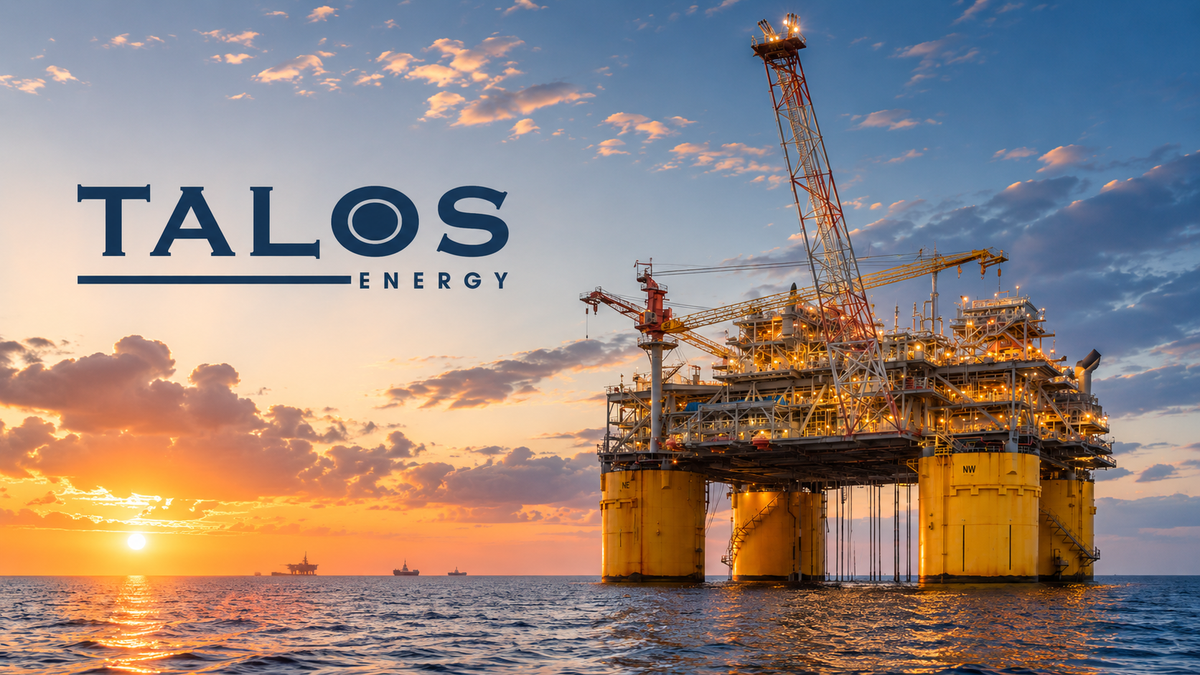
Talos Energy is a useful test of a question that confronts many growing independent oil companies. The person who is exceptionally well suited to build a business is not always the obvious person to lead it once it becomes larger, more complex and more institutional.
Boards often respond by looking for a different kind of chief executive, frequently from Big Oil, where executives have managed organisations and capital programmes of far greater scale. That can be a sensible choice, but it comes with its own risks.
Talos has moved from its founder Tim Duncan, an entrepreneur whose career was built around creating independent oil companies, to Paul Goodfellow, who spent more than three decades at Shell. The contrast offers us a useful way to examine what each type of career prepares a CEO to do, what it may leave untested, and what can be gained or lost when a founder-built company chooses a more institutional leader.
When Tim Duncan founded Talos Energy, it was not his first rodeo. It was the third version of an independent oil company model that Duncan and many of the same people around him had been developing for more than a decade. By the time Talos was created in 2012, the group behind it had already built and sold two Gulf of Mexico businesses, worked together through several commodity cycles and developed a way of combining subsurface judgement, acquisitions, exploration and portfolio management. Talos was less a conventional start-up than the continuation of an entrepreneurial system built and honed by the same team.
Duncan trained as a petroleum engineer at Mississippi State and later completed an MBA at the University of Houston. His early career included reservoir engineering and evaluation roles at Pennzoil, Zilkha Energy and, my old stomping ground, Amerada Hess. Zilkha was a relatively small Gulf of Mexico company using improved seismic imaging and technical interpretation to find value that larger organisations had missed. Duncan has since spoken about being struck by how much value a small team could create. The people evaluating the subsurface were close to the key decisions on asset acquisitions, committing capital and realising value from the business.
Tim then joined Gryphon Exploration in 2000 as Manager of Reservoir Engineering and Evaluations. Gryphon was backed by private capital and pursued Gulf opportunities that required technical and commercial decisions to sit close together. An asset had to be understood geologically, valued financially and compared with the other places where a limited pool of capital could be deployed. Gryphon was acquired by Woodside in 2005, after which Duncan and several colleagues, like many successful PE-backed management teams, began again from scratch.
Phoenix Exploration was formed in 2006. Steve Heitzman, another Gryphon veteran, became President and CEO, while Duncan was a founder and Senior Vice President of Business Development. John Parker, who would later be part of Talos, led exploration. Duncan's role put him directly into asset evaluation, negotiations and transactions, giving him experience of the corporate side of an independent before he became a chief executive himself. Phoenix was sold in 2011 to a buyer group led by Apache. By then, Duncan had spent more than a decade close to the important decisions around subsurface, capital deployment and M&A that are the key building blocks in forming and growing a successful E&P company.
Apollo and Riverstone backed the formation of Talos Energy LLC the following year with commitments of up to $600 million. Duncan became President and CEO and was joined again by several executives from Gryphon and Phoenix. Members of the team had already worked together for more than a decade, and much of the capability sat in a group of people who had spent years assessing opportunities and making investment decisions together. Duncan was the founder and chief executive, but Talos was also the product of a management team with a long shared history.
The choice to stay offshore, and specifically in the Gulf of Mexico, was not an obvious one. It was made while North American capital was moving heavily towards shale. Horizontal drilling and hydraulic fracturing were transforming US oil and gas, attracting large amounts of equity and debt and changing the way investors thought about growth. Talos stayed with the Gulf, where Duncan and his colleagues understood the assets and where reduced competition could create opportunities. The company moved quickly, acquiring Helix's Energy Resource Technology business in 2013 and giving itself an operating platform rather than waiting for exploration success to establish a production base.
The model that developed mixed acquisition, exploitation of existing infrastructure, exploration and development. Existing production could fund activity elsewhere, mature facilities could support nearby discoveries, and acquired portfolios could contain opportunities that looked different once examined by another technical team. Talos was neither simply an explorer nor merely a consolidator of ageing offshore production. Its strategy depended on seeing assets simultaneously as subsurface opportunities, operating positions and pieces of a wider corporate portfolio.
Zama demonstrated the exploration side of that culture. Talos entered Mexico following the reopening of the country's upstream sector and, together with Premier Oil and Sierra Oil & Gas, discovered Zama in 2017. It was one of the most significant offshore discoveries of the period and gave Talos a profile far beyond its corporate size. The project later became complicated by unitisation and the role of Pemex, and Talos subsequently began monetising part of its exposure, but the original decision to enter Mexico showed a willingness to accept geological, commercial and country risk in pursuit of something capable of materially changing the company.
Duncan described the chief executive role around that time in terms that reflected the environment in which he had spent his career. He needed to understand Talos's capital structure and liquidity, make the final call on major capital-allocation decisions and attract the people required to create shareholder value. In an independent company, those responsibilities are tightly connected. An exploration programme, an acquisition and the balance sheet all compete for the same pool of capital, and getting one of those decisions wrong can not only damage returns but materially impede the company's ability to keep growing.
Talos became a public company in 2018 through its combination with Stone Energy. Duncan had spent much of his career answering to concentrated private-equity owners, some of whom were already familiar with the management team from earlier ventures. He was now running a listed company whose shares could be compared every day with other E&Ps, with the oil price and with any number of alternative investments. The company continued to expand rather than shifting primarily towards a cash-return model.
The acquisition programme remained central. Talos agreed to acquire EnVen Energy in 2022 for $1.1 billion, adding oil-weighted deepwater production and increasing its operated infrastructure. In January 2024 it agreed to acquire QuarterNorth Energy for $1.29 billion, adding further production, reserves and operating positions. Talos had also developed a carbon capture and storage business along the US Gulf Coast before selling it to TotalEnergies in 2024. By then, Talos had become a much larger and more complex company than the business formed in 2012, while remaining firmly centred on the Gulf of Mexico. It was now a meaningful publicly listed E&P, with greater operating scale and a wider set of capital-allocation demands from both the business and its shareholders.
The market did not always reward that growth in the way the expansion of the company might suggest. Talos came public into an environment in which shale commanded much of investor attention, then lived through weak oil prices, the 2020 collapse and a wider change in E&P investor expectations away from production growth and towards free cash flow, debt reduction and distributions. Long-cycle offshore investment was also distinctly out of favour. Investors had become accustomed to the short development times, visible drilling inventories and apparent capital flexibility of shale, while offshore projects were often viewed as slower, more capital intensive and less responsive to the commodity cycle.
That preference became fashionable across the sector, although it was not necessarily economically correct. Short-cycle shale brought its own problems of rapid decline, repeated reinvestment and finite high-quality inventory, while offshore assets could offer long-lived production, infrastructure value and lower decline once developed. Those characteristics have since returned to favour as the industry has paid more attention to resource duration and the limitations of continuously replacing rapidly declining shale production. Deepwater has again become an important source of growth for major and independent producers. Talos spent much of Duncan's tenure building a business around assets whose characteristics were not always those the market wanted to reward at the time, but which look rather less unfashionable today.
That backdrop makes Talos's share-price record harder to interpret in isolation. A company can issue equity, buy assets and build a larger portfolio while its market valuation remains constrained by sector sentiment, commodity prices or a lack of enthusiasm for the type of growth being pursued. Duncan's record is better judged alongside the business Talos became under his leadership and the subsequent return of industry interest in deepwater. Talos grew materially, acquired substantial offshore infrastructure and retained a willingness to pursue exploration opportunities capable of changing the scale of the company.
Growth also changes the job of the person running it. The founder of a relatively small business can know most of the senior team personally, participate directly in the largest investments and remain close to individual assets. As the organisation expands, more decisions have to be made without the founder in the room. Authority moves further down the company, information has to move reliably back up, and processes that once seemed unnecessary begin to determine whether the organisation can reproduce good decisions across a larger portfolio.
Founders often build companies by moving quickly, concentrating responsibility and accepting a level of uncertainty that larger organisations would prefer to reduce before acting. The same company may later need more delegation, more formal planning and more repeatable ways of assessing capital. The ownership model can change the demands as well. A PE-backed company is typically working with a small number of highly engaged owners who know the management team and understand the investment thesis in detail. A public company has a broader shareholder base, continuous market scrutiny and investors who may have very different views on growth, leverage and the use of capital. Those changes can be difficult because they alter some of the mechanisms through which the business originally succeeded. There is no public evidence that Duncan resisted that evolution. The issue arises because companies can grow beyond the scale, and beyond the ownership structure, in which one person's judgement can remain embedded in every important decision.
Formal structures can improve a larger organisation. Investment criteria become clearer, operating systems more consistent and responsibility easier to delegate without losing visibility. Offshore oil and gas makes some of those benefits particularly valuable because individual wells can involve large capital commitments, infrastructure carries long-term abandonment liabilities and operating failures can have consequences far beyond a missed quarterly target. A company that has grown through the judgement and relationships of a relatively small group eventually needs to ensure that the organisation itself can keep making good decisions as responsibility spreads more widely.
The same process can remove something valuable. Independent oil companies often exist because they can make decisions that larger companies find difficult. A mature field that barely moves the needle for Shell or BP can be highly material to a smaller operator. A discovery that is too small to justify attention in a supermajor portfolio may offer excellent economics if tied back to existing infrastructure. An independent can tolerate concentration that would be uncomfortable for a major and may be able to act on an acquisition or farm-in before a longer corporate approval process has run its course. Larger organisations also tend to rely less on individual talent and concentrated decision-making. They are designed to produce consistent outcomes through systems, committees and repeatable processes rather than through the judgement of a small number of people. That can make them more resilient, but it can also reduce the influence of individuals with distinctive judgement or expertise whose views might otherwise have a material positive influence on the company's direction.
That balance becomes harder as the independent gets bigger. Too little structure leaves the company dependent on individuals and makes consistent decision-making harder. Too much structure can turn an entrepreneurial organisation into a smaller imitation of the companies from which it once bought overlooked assets. A larger independent has to become less dependent on its founder without losing the ability to make the kinds of decisions that made the company worth building. That is not easy.
Talos had plainly become a bigger and more complex company by 2024. Duncan left in August of that year. Talos has not publicly explained the underlying reasons for the leadership change, and there is no basis for reconstructing them from the outside. Larger founder-led companies often reach points at which boards consider whether a different type of chief executive might suit the next stage of development. That general pattern tells us nothing definitive about what happened inside Talos. The choice the board eventually made, after a search lasting roughly six months, does allow a different question to be asked.
Tim's replacement, Paul Goodfellow, spent more than 34 years at Shell, much of it in wells, with some broader assignments in regional and business leadership, including Shell's global deepwater business. He therefore arrived at Talos with deep technical understanding of wells and substantial experience of working inside a major oil company, but with a career that had been formed very differently from Duncan's.
That matters more at a company the size of Talos than it would at Shell. A supermajor is deliberately built so that the institution is stronger than any individual executive. Strategy, treasury, M&A, portfolio management, investor relations, technical assurance, legal, risk and government affairs all exist around the operating businesses, supported by deep benches of specialists and multiple layers of challenge. A senior executive can be extremely influential, but the organisation is designed to keep functioning if that person leaves. At a small or mid-cap E&P, the chief executive can be one of the most important capabilities the company possesses. A handful of decisions on assets, exploration, acquisitions and capital can alter its direction for years.
The difference is partly one of concentration. Shell can make a poor investment and absorb it within an enormous global portfolio. A comparable mistake at Talos can constrain the balance sheet, prevent the next acquisition, force an asset sale or reduce the capital available for exploration. The reverse is also true. A single well, discovery or transaction can materially increase the value of a smaller company. The quality of individual judgement therefore has far more leverage on the outcome. Investors in a mid-cap E&P are buying the assets, but they are also buying the judgement of the people deciding what those assets should become.
An E&P company is also not simply a collection of wells that are drilled. Wells are one important part of a much wider system that includes geology, geophysics, reservoir engineering, exploration strategy, development planning, production operations, infrastructure, commercial agreements, portfolio management, financing, M&A and capital allocation. A senior wells executive can have exceptional expertise in an area on which billions of dollars depend without having spent the same amount of time making the broader corporate choices that determine which assets the company should own, what it should pay for them and how aggressively it should grow.
That is not an argument that Goodfellow was the wrong appointment. A growing E&P may have very good reasons to recruit someone from a major. Talos had become a much larger deepwater business with more assets, more wells, more infrastructure and greater operational complexity than the company Duncan originally founded. Goodfellow's experience of Shell's technical standards, wells organisation and global deepwater portfolio may prove highly valuable as Talos operates at that scale. His knowledge of Shell's offshore asset base, the way a supermajor allocates capital and the people across the industry may also be useful in identifying and acquiring assets, particularly where those assets are being sold by Shell or other majors. The open question is whether those capabilities translate into the broader corporate judgement required of the CEO of a listed independent.
The scale of a role inside Big Oil can make that question surprisingly easy to overlook. Someone may have managed a drilling organisation many times larger than an entire independent E&P company, controlled huge budgets and worked across some of the most technically demanding assets in the world. The numbers are impressive, but they do not necessarily tell shareholders how much of that person's career involved deciding which basin the company should enter, whether an acquisition offered better value than exploration, how much leverage the balance sheet could safely support, when an asset should be sold or whether the company's own shares were the best investment available.
Those decisions matter more as the company gets smaller because there is less institution around the CEO to compensate for gaps in experience. A major can surround an executive with specialists who have spent entire careers in corporate finance, M&A, portfolio management or capital markets. A mid-cap E&P has fewer layers and fewer places for responsibility to diffuse. The CEO may be the person who first identifies an acquisition, challenges the geological case, decides whether the price is acceptable, chooses how far the balance sheet can stretch and then explains the decision directly to shareholders. Weakness in one of those areas can flow much more quickly into the value of the company.
Oil and gas investors can sometimes give technical credentials more weight than they deserve when assessing chief executives. Drilling is tangible, highly visible and easy to associate with the physical business, but in established basins the industry already knows how to drill the well. Contractors, service companies and experienced technical teams provide mature capabilities, and execution can be measured and improved. Much of the value has already been determined before the rig arrives: which acreage the company chose to own, what it paid for it, whether exploration offered a better return than acquisition, how the opportunity was financed and what other uses of capital were rejected to pursue it. Those are much closer to the decisions on which a public E&P CEO ultimately succeeds or fails.
The geology can be excellent and the well can be drilled perfectly while shareholders still receive a poor outcome if the company paid too much for the acreage, funded it badly or chose the opportunity over something better. A technically marginal asset can sometimes create substantial value if it is acquired cheaply and existing infrastructure changes the economics. The CEO therefore needs enough technical understanding to challenge the specialists, but the job is not to be the best driller, geologist or reservoir engineer in the company. It is to decide which technical opportunities deserve shareholders' capital and which do not.
Duncan's career had put him unusually close to those choices. At Gryphon, Phoenix and then Talos, subsurface judgement, capital deployment and M&A were among the principal building blocks of the businesses themselves. The organisations were small enough that these decisions could not be separated into distant corporate functions. His business-development role at Phoenix had placed him directly into evaluations and transactions before he became a chief executive, and Talos then required him to make the same kinds of choices with an increasingly large balance sheet.
Goodfellow's Shell career was built inside a very different system. Shell could surround a senior technical or business leader with treasury, corporate development, central strategy, investor relations, specialist commercial teams and a group-level capital-allocation process. A wells leader could therefore become very senior while remaining primarily a wells specialist. Broader management assignments increase the range of experience, but they do not recreate the environment in which the chief executive personally carries responsibility for the major choices affecting the value and future of the whole company.
That institutional strength is one of the reasons majors can tolerate changes in individual leadership better than smaller E&Ps. Shell does not cease to understand LNG, deepwater or trading because one executive leaves. The processes, data, technical capability and organisational memory remain. A mid-cap company can be much more exposed to individual judgement. A CEO with unusual skill in recognising acquisitions, understanding the subsurface or judging the right moment to take risk can have a disproportionate positive influence on the company. Replacing that person changes more than the name on the organisation chart.
The same concentration creates risk. A founder-led company can become too dependent on the founder, particularly as it grows and more decisions need to be delegated. The argument is not that concentrated judgement is always preferable. Talos had become large enough that greater structure and repeatability were increasingly valuable. It is simply that the transition cannot be assessed by assuming a larger corporate background automatically represents an upgrade in CEO capability. The executive from the major may bring systems and technical depth while still having to learn parts of the job that the founder had been practising for years.
Public ownership magnifies the difference. The CEO of a listed independent has to decide not only where to spend capital but whether the company should spend it at all. An attractive acquisition may still be inferior to repurchasing the company's own shares. Exploration may offer substantial upside but compete with debt reduction. Growth may justify issuing equity at one valuation and erode much of the benefit at another. An asset may be strategically attractive but simply too expensive. These choices sit above the technical merits of the individual opportunity and can determine whether corporate growth becomes shareholder value.
M&A brings the issue into particularly sharp focus. An executive can spend years assessing acquisitions inside a major without having been the person who first decided that a particular strategic move should exist. Smaller-company CEOs often have to originate as well as approve. They need to recognise an opportunity before a formal process develops around it, understand why the seller sees the asset differently, judge how much of the balance sheet should be committed and know when to walk away despite the work already invested. One good acquisition can transform a smaller E&P; one bad one can remove years of financial flexibility.
Goodfellow may have an advantage here that is easy to miss if his background is considered only in terms of wells. Three decades at Shell give him extensive knowledge of the offshore industry, of how a supermajor assesses and ranks assets, and of many of the people who manage those portfolios. A former head of Shell's global deepwater business may understand particularly well why an asset that struggles to compete for capital inside a supermajor can have much greater value in a smaller company. That knowledge could prove useful to Talos as the majors continue to reshape their portfolios.
History offers enough examples to make shareholders cautious about assuming that seniority inside Big Oil is sufficient preparation. John Manzoni spent 24 years at BP, reached its board and ran Refining & Marketing before becoming chief executive of Talisman Energy. He followed Jim Buckee, under whom Talisman had been built through a much more entrepreneurial international model. Manzoni's tenure ended in 2012 and his successor, Hal Kvisle, subsequently placed greater emphasis on living within the company's means, focusing capital and improving operations. Talisman's problems cannot sensibly be attributed to Manzoni's BP background, but the scale of his previous responsibilities did not make success at an independent automatic.
Chris Finlayson spent more than 30 years at Shell before joining BG Group and later becoming chief executive. His tenure at the top was short and difficult, although he inherited genuine operating and project problems. Andy Inglis spent 30 years at BP and ultimately ran its exploration and production business before later becoming chairman and CEO of Kosmos Energy. Kosmos has developed significant resources under Inglis while also facing difficult questions around leverage and shareholder returns. These are complicated records rather than evidence for a rule, but they show why the size of a previous corporate title should not end the examination of a CEO candidate.
There are also strong counterexamples. Peter Coleman spent 27 years at ExxonMobil before leading Woodside for a decade. Lee Tillman moved from ExxonMobil to Marathon Oil and ultimately led the company through substantial portfolio change and its sale to ConocoPhillips. Roy Franklin moved from BP into smaller independent-company environments including Clyde Petroleum and Paladin Resources. Executives can clearly move successfully from Big Oil into smaller public companies. What matters is how broad their experience became and how effectively they adapted once the institution around them could no longer carry so much of the corporate decision-making burden.
Goodfellow's early decisions at Talos are encouraging in that respect. His 2025 strategic reset was not centred on wells or operational metrics alone. It introduced clearer objectives around cash-flow improvement, leverage and shareholder distributions while retaining organic investment, selective acquisitions and longer-term offshore growth. Talos has reduced leverage and repurchased shares while continuing to invest in its portfolio. Those are whole-company decisions and provide more useful evidence of his development as a public E&P CEO than his previous technical titles.
He also inherited a strong platform from Duncan. Talos already had meaningful Gulf production, operated infrastructure, exploration capability and the additional scale created through EnVen and QuarterNorth. Deepwater itself had moved back towards the centre of industry attention after years in which investors strongly preferred short-cycle shale. Goodfellow did not arrive to rescue a failed E&P or repair a broken asset base. He arrived to lead the next phase of a company that Duncan and his colleagues had already built to meaningful scale.
The recent agreement to acquire deepwater Gulf assets from Shell is particularly interesting. A former head of Shell's global deepwater business now leads an independent acquiring assets from the company where he spent most of his career.There is no public evidence that Goodfellow personally originated the transaction, but his relationships within Shell, familiarity with its Gulf portfolio and understanding of how a supermajor ranks competing investments may have been useful in identifying the opportunity and getting Talos into a position to pursue it.
Talos does not need to operate those assets as Shell did. Mature infrastructure, smaller developments, field-life extension and nearby exploration can be much more important to a mid-cap independent than to a supermajor comparing them with opportunities across a global portfolio. Goodfellow may therefore bring an advantage on both sides of the transaction: understanding why Shell is prepared to sell an asset and why the same asset might be worth more inside Talos.
Talos has continued to take exploration and development risk as well. Its activity in Mexico, its new operated exploration position offshore Honduras and its Gulf appraisal and drilling plans suggest that the clearer financial framework has not turned the company into a business concerned only with harvesting existing production and returning cash. Goodfellow has so far combined some of the financial characteristics public investors increasingly demand with the exploration and portfolio activity that formed part of Talos's original identity.
The decisions that will tell us most about him probably still lie ahead. Strong cash generation can allow a company to fund exploration, reduce leverage, repurchase shares and consider acquisitions at the same time. The CEO's capability becomes more visible when those choices compete directly. Talos will eventually face moments when an acquisition looks attractive but its own equity is cheap, when exploration upside competes with debt reduction, or when a strategic opportunity requires more capital than shareholders want the company to spend.
At a major, the consequences of a single decision can be diluted across a vast portfolio and an institutional decision-making system. At Talos, one of those decisions can alter leverage, ownership, resource life and the company's ability to pursue the opportunity that comes next. That is why the quality and breadth of the CEO matter so much more at a company of this size. There are fewer layers between the judgement of the individual and the financial outcome experienced by the shareholder.
Goodfellow may prove very good at making those choices. His early Talos record gives some evidence that he is broadening beyond the technical discipline in which much of his career was formed, and his Shell knowledge may create commercial advantages that are difficult to replicate. It remains reasonable for shareholders to recognise that some of the most consequential parts of the independent-company CEO job were less directly tested by his previous career than his expertise in wells and deepwater.
Talos therefore provides a more interesting succession than the familiar story of a founder handing over to a professional manager. Duncan had spent much of his career around the decisions that form and grow independent E&Ps: subsurface, capital deployment and M&A. Goodfellow had developed deep expertise in wells and later broader management experience inside Shell. Talos became large enough that its board chose that very different background for the next phase.
The company does not need Goodfellow to be the best wells engineer in the room. It needs him to be the best person to decide which risks Talos should own, where its scarce capital should go and which opportunities should be rejected so that better ones can be pursued. His technical background may help him make those decisions, his Shell relationships may expose him to opportunities and his experience of a major may bring useful discipline. None of those things substitutes for the judgement required to run the whole company.
That is ultimately what Talos will test. In a supermajor, the institution is designed to be stronger than the individual. In a small or mid-cap E&P, the chief executive can be one of the most important assets the company has. Duncan built Talos through a career spent close to the decisions that determine what an E&P should own and where it should deploy capital. Goodfellow now has to show that the expertise and experience accumulated inside Shell can be converted into that broader form of judgement when the consequences of the decision sit almost entirely inside the company he leads.