Who Could Buy BP's UK North Sea Business?
BP is selling 100,000 boe/d of UK North Sea production, but who will buy it? We assess NEO NEXT+, Adura, EnQuest, Serica, Harbour and Ithaca, including the possibility of Harbour acquiring BP's assets and spinning off a separately listed UK producer.

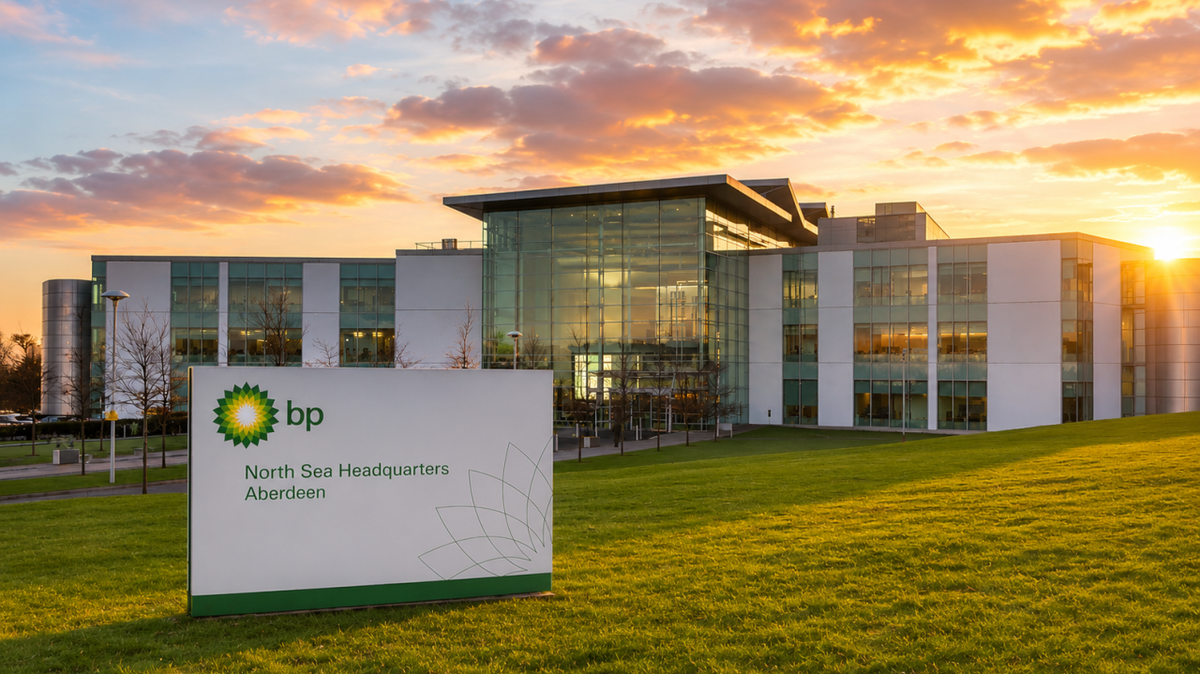
BP's decision to sell its UK North Sea business presents an unusual opportunity. Around 100,000 barrels of oil equivalent per day of production, five operating hubs and some of the country's best-known offshore oilfields are coming to market. Rystad Energy has estimated the portfolio's value at approximately $2.6 billion, although the eventual transaction price will depend on decommissioning liabilities and deal structure as much as the underlying assets.
The sale comes at an interesting time for the UK upstream industry. Over the past several years, many of the majors and large independents have been diversifying away, discouraged by high taxation, political uncertainty and the limitations of an increasingly mature basin. Harbour Energy has become an international producer, EnQuest is expanding dramatically in Malaysia, and Ithaca Energy has just agreed its first acquisition outside the UK.
That leaves a relatively small group of obvious purchasers. The two largest UK-focused producers stand out: NEO NEXT+, which we will call simply NEO, and Adura. But both were created through transactions in which international oil companies reorganised their British upstream interests into separately managed businesses. Whether those shareholders now want to increase their UK exposure is an interesting contradiction.
For BP, the objective is relatively straightforward. Chief executive Meg O'Neill is simplifying the business and reducing debt. Cash proceeds matter, but so does the financial standing of a purchaser that will inherit substantial future decommissioning obligations. BP may also retain residual statutory exposure as a former licensee. An attractive headline price is therefore only one consideration.
The obvious candidates
NEO looks a natural place to start. Formed from the combination of NEO Energy, Repsol's UK business and subsequently TotalEnergies' UK upstream operations, it has become the country's largest independent producer, with expected production exceeding 250,000 boe/d in 2026. Its shareholders are TotalEnergies, with 47.5%, HitecVision, with 28.9%, and Repsol, with 23.6%.
The company has positioned itself as a consolidator of the UK Continental Shelf and has recent experience acquiring BP assets. Last year, Serica Energy agreed to purchase BP's 32% interest in the Culzean gas-condensate field for $232 million, only for NEO to exercise its pre-emption right under the field's joint operating agreement (Culzean's underlying P111 licence dates back to 1970, when pre-emption rights were allowed).
Executive chairman John Knight has provided some particularly interesting insights into the acquisition strategy. In a September interview with Energy Council, he explained that the biggest structural advantage in the transactions with ExxonMobil, Repsol and TotalEnergies was the retention of substantial decommissioning liabilities by the sellers. The enlarged business has a gross decommissioning bill of approximately $10 billion, but Knight estimates its net cash exposure at only about 25% after seller retentions and tax rebates.
That is quite an achievement, and potentially relevant to BP's disposal. It demonstrates how large portfolios can be assembled while limiting the future cash burden of decommissioning. But the approach also creates a tension with BP's desire to simplify its business and reduce financial exposure. Knight has emphasised that new acquisitions must improve cash flow and support shareholder returns. Another substantial transaction would need to satisfy those criteria and secure the support of three major shareholders.
Adura offers a different industrial argument. The Shell-Equinor joint venture is already BP's largest partner west of Shetland, holding 27.97% of Clair and 44.9% of Schiehallion. Acquiring BP's respective interests of 45.1% and 33.3% would give it approximately 73% of Clair and 78% of Schiehallion, making it the overwhelming majority owner of both developments and a natural candidate to assume operatorship.
That degree of consolidation has obvious attractions, bringing substantially greater control over investment decisions and the future development of two major producing assets. The business also has considerable operating scale elsewhere in the North Sea, including Jackdaw, which received government approval on 21 October, and Rosebank, which still awaits its regulatory decision.
Yet the ownership question remains. Shell and Equinor created the joint venture by combining their UK upstream businesses. Do they now want to commit substantial additional funds to acquire BP's interests, particularly when both have competing investment opportunities internationally?
There is also a valuation question. An existing partner has a strong industrial reason to consolidate ownership, but that does not necessarily mean it will be prepared to pay the most. A purchaser with substantial usable UK tax losses might attach greater financial value to the same producing assets. The North Sea's ownership history does not necessarily determine who should own its assets next.
The listed independents
EnQuest deserves consideration, not least because chief executive Amjad Bseisu publicly expressed interest in BP's assets in September. The companies also have a history of imaginative transactions. The acquisition of the Magnus field from BP in 2017 was financed substantially through cash flows from the acquired assets, demonstrating how a large transaction can be structured without the full consideration being paid upfront.
The company has considerable experience operating mature North Sea fields and substantial historic UK tax losses. Its operation of the Sullom Voe Terminal also gives it an infrastructure interest in production west of Shetland. But the complication is its changing geographical direction.
The agreed acquisition of Malaysian offshore interests from PETRONAS will transform the business, with Southeast Asia expected to represent approximately 69% of enlarged production. Investors responded enthusiastically to the June announcement, with the shares rising around 20%, while shareholders subsequently approved the acquisition with 99.97% of votes cast in favour.
That doesn't mean investors would oppose further UK acquisitions, particularly smaller transactions where existing operating capabilities and tax advantages could be exploited. But a multibillion-dollar acquisition of BP's entire UK business would represent another transformational deal, this time taking the company back towards the basin from which it has been diversifying. Management would need a particularly compelling commercial argument.
Serica Energy has a different problem: scale. It has demonstrated considerable appetite for acquisitions, most recently completing the purchase of Southern North Sea assets from Spirit Energy in October. But its unsuccessful attempt to acquire Pharos Energy, with operations in Egypt and Vietnam, raises an interesting question about its longer-term direction. Does management want to remain a predominantly UK North Sea producer, consolidating assets as others withdraw, or is it looking to diversify internationally?
The company also has substantial historic tax losses. At the end of 2025, these included $2.2 billion of ring-fence corporation tax losses, $1.9 billion of supplementary charge losses and approximately $0.5 billion of Energy Profits Levy losses. The latter are particularly relevant because losses predating the levy cannot shelter EPL profits, whereas qualifying EPL losses can be carried forward.
Those tax attributes could make additional profitable UK production attractive, subject to the restrictions governing their use. But acquiring the entire BP portfolio would require financing on a scale considerably beyond Serica's existing resources. A substantial new equity investor could change that calculation, while a consortium supported by conventional debt and potentially deferred consideration offers another possibility. Anything is possible, but this would be a considerable stretch. A transaction of this magnitude would likely constitute a reverse takeover under the UK Listing Rules, requiring shareholder approval. Management would therefore need to present a compelling value proposition to existing investors.
Such an acquisition would fundamentally reshape the business, but so would a meaningful move overseas. Serica described its proposed Pharos acquisition as part of a long-standing ambition to expand internationally, and demonstrated considerable price discipline when it declined to match a rival offer just 0.5% higher. The availability of finance is one question; whether shareholders would support such a substantial commitment to the UK is another.
The companies looking elsewhere
Harbour Energy presents one of the more intriguing possibilities, precisely because a straightforward acquisition would seem, to put it mildly, at odds with its strategy. Having been outspoken in its criticism of the UK fiscal regime, the company has transformed itself from a predominantly North Sea producer into a large international independent, with substantial operations in Norway, the United States, Argentina, Mexico and elsewhere. Its recent LLOG acquisition in the US Gulf has continued that diversification.
Nevertheless, Harbour retains interests in two of the most important BP-operated hubs, Clair and Schiehallion, while its acquisition of Waldorf's UK subsidiaries brought substantial historic tax losses, with an estimated potential tax benefit of approximately $900 million. The Waldorf restructuring was itself contentious. HMRC opposed the arrangement in court but was unsuccessful, although the judgment did not remove HMRC's normal powers to challenge how those losses are subsequently used.
That raises a more imaginative possibility. Harbour could acquire BP's assets, combine them with its remaining UK operations and subsequently spin off the enlarged UK business as a separately listed company. Such a transaction could create a substantial specialist North Sea producer with considerable production, infrastructure and tax attributes, while leaving the international business free to pursue opportunities elsewhere. A spin-off would also address what I consider an increasingly important issue for Harbour following its international diversification: shareholders would be able to choose whether they wanted exposure to the UK business, the international portfolio or both, rather than having those very different investment propositions combined within a single company.
It would, of course, be a complex undertaking, requiring careful allocation of financing, tax assets and decommissioning liabilities. There might also be little appetite for another major transaction after the recent international expansion, particularly one that initially increases exposure to a fiscal regime the company has been so critical of. Nevertheless, the possibility is worth exploring, especially given Harbour's history of large corporate combinations and the potential attraction of creating two separately investable businesses.
Ithaca Energy might initially have appeared one of the most obvious purchasers. Indeed, it reportedly held advanced discussions with BP earlier this year, but the parties could not agree on price. Since then, it has committed $860 million upfront, with up to $250 million of additional oil-price-contingent consideration, to acquire Suncor's interests in Terra Nova and White Rose offshore Canada.
That is a substantial new financial commitment, alongside future investment and abandonment obligations. A return to the negotiating table is conceivable if BP's price expectations changed or new financing became available, but another acquisition of this scale now looks considerably harder to accommodate. The move into Canada also suggests that management sees attractive opportunities beyond the British North Sea.
Could someone unexpected emerge?
Vår Energi has reportedly been mentioned among potential interested parties. The Norwegian producer has the operating experience, financial resources and scale to consider a substantial offshore acquisition, but its investment proposition is built around Norway. Entering the UK would expose shareholders to a different fiscal regime and undermine some of the attractions of its geographical focus. There would need to be a compelling commercial rationale.
Private equity offers another possibility. Financial sponsors have played a central role in the creation of North Sea independents, often acquiring portfolios from international oil companies whose investment priorities have shifted elsewhere. A new vehicle backed by financial investors, an overseas oil company or perhaps a trading house could acquire BP's business and eventually seek a public listing or further consolidation. A consortium combining industrial and financial investors is another conceivable route.
Such possibilities are speculative, but they illustrate why identifying the obvious industrial purchasers does not necessarily identify the eventual winner.
Everything comes down to price
The BP portfolio is particularly interesting because several potential purchasers hold substantial historic UK tax losses, while opportunities to acquire producing assets of this scale are becoming increasingly scarce. Those losses could influence what bidders are prepared to pay, although their value depends on future taxable profits, the applicable restrictions and the remaining life of the assets.
Operating efficiencies, financing costs and decommissioning arrangements will also determine valuations. Knight's comments illustrate how profoundly the retention of abandonment liabilities can alter the economics of an acquisition. Equally, the Magnus transaction and Ithaca's contingent consideration agreement with Suncor demonstrate the variety of structures available when buyer and seller have different views about value or risk.
BP is likely to prefer a sale of the entire business. Splitting the portfolio between purchasers is possible, particularly given the different assets and operating regions, but dividing an established organisation and its liabilities would add complications. A single purchaser, even one that subsequently reorganised or sold individual interests, appears the more straightforward outcome.
What makes the auction interesting is that almost every potential buyer faces a different dilemma. NEO has the consolidation strategy but must satisfy its shareholders. Adura has compelling ownership logic west of Shetland but potentially conflicting priorities among its parents. EnQuest and Ithaca are expanding internationally, Serica would need substantial financial support, and Harbour might require an entirely different corporate structure to make an acquisition attractive.
Yet none of those complications necessarily excludes a transaction. At the right price, strategic objections can become manageable and unconventional structures commercially attractive. At the wrong price, even the most obvious purchaser will walk away.
The most logical industrial buyer need not be the highest bidder.
Disclosure: The author holds shares in BP, Harbour Energy and EnQuest. The companies and potential transactions discussed are considered as an exploration of possible commercial outcomes, not as predictions of bids or investment recommendations.