Gulf Keystone and ShaMaran Merger: A PetroEquity Signal Quick Look
Gulf Keystone's merger with ShaMaran brings the Lundin family into the driving seat and shifts the enlarged company to Oslo. We examine the deal's timing, relative asset values and whether the combination can deliver greater returns for shareholders.

After more than three years of disrupted oil exports and repeated production shutdowns, Gulf Keystone has found a partner, a new largest shareholder in the Lundin family and a new home in Oslo. The transaction offers an opportunity to create a larger Iraqi upstream business, although its ultimate value to shareholders remains to be established.
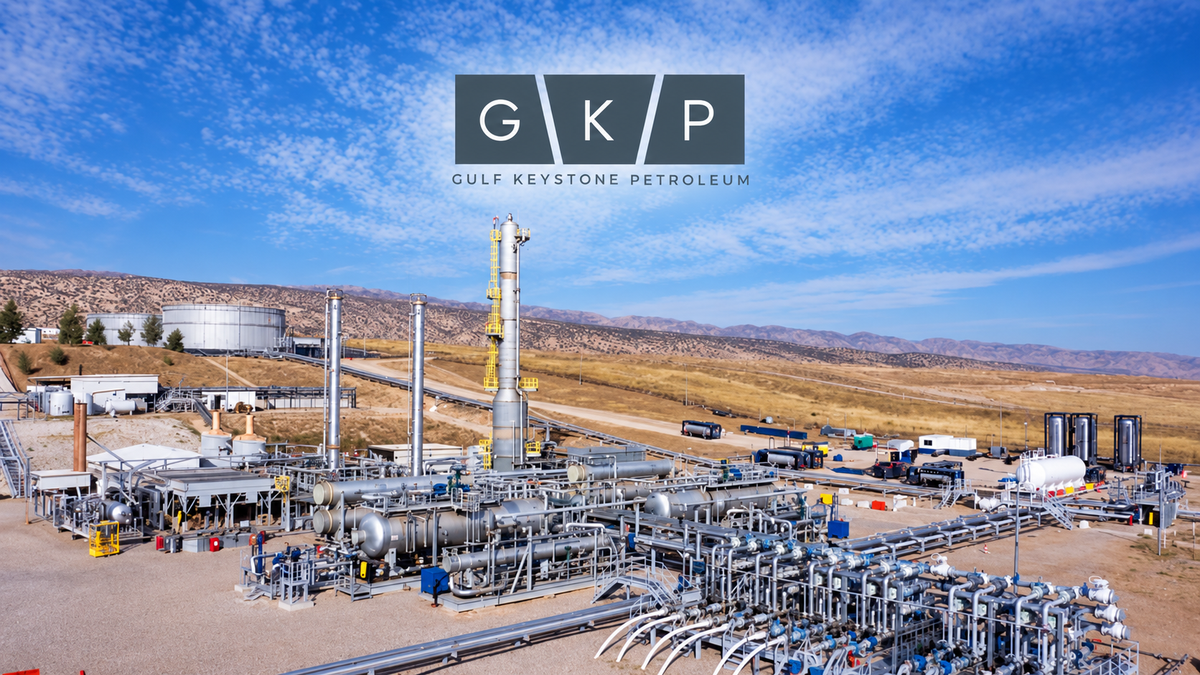
For more than three years, Gulf Keystone Petroleum has offered a lesson in how little a good oilfield can be worth when its oil cannot reach the market. Shaikan, its field in the Kurdistan Region of Iraq, is cheap to operate, has substantial reserves and has already produced more than 150 million barrels.
In March 2023, an arbitration ruling between Iraq and Turkey led to the closure of the export pipeline, forcing Gulf Keystone to sell crude locally at a fraction of international prices. Exports eventually resumed in September 2025, only for regional military conflict to force two precautionary shutdowns of Shaikan during 2026.
At 7 a.m. today, 20 October 2026, Gulf Keystone announced an all-share merger with ShaMaran Petroleum, a neighbouring Kurdistan oil producer and part of the Lundin Group. Shareholders in each company will own half the enlarged business, while existing Gulf Keystone investors are expected to receive a $50 million special dividend. The combination will bring together interests in four Iraqi oilfields, 323 million barrels of working-interest 2P reserves and potential production of 53,000 barrels a day, creating a company with a market capitalisation exceeding $1 billion.
The Lundin family will become its largest shareholder, with approximately 12.8% of the equity, and William Lundin is proposed as chairman. The company also intends to move its primary listing to Oslo's main market and, in due course, discontinue its London listing.
The Lundins' arrival is particularly interesting. Their history of building upstream businesses, undertaking acquisitions and creating shareholder liquidity raises the prospect that this merger could be the beginning of a wider corporate strategy. But Gulf Keystone shareholders must first consider what each company contributes and whether the combination can generate more value than either business could achieve independently.
Who contributes what?
The two companies bring quite different assets to the merger. Gulf Keystone's internal estimate of Shaikan's gross 2P reserves at the end of 2025 was 416 million barrels. The merger uses a 61.5% working interest rather than the 80% stated in the existing contract, reflecting the expected formalisation of an interest for the Kurdistan Regional Government. Gulf Keystone has already accounted for the lower economic entitlement for several years.
On that basis, Shaikan contributes approximately 256 million barrels, or 79% of the combined 323 million barrels. ShaMaran contributes the remaining 67 million barrels, excluding its newly announced Hamrin investment. However, reserve volumes alone say little about relative economic value. Production profiles, development costs, contractual entitlements and the timing of future cash flows all need to be considered when assessing the agreed 50:50 ownership split.

Sources: Merger announcement and company results. Reserves exclude Hamrin; production assumes estimated restart rates for ShaMaran. First-half financial results were distorted by the shutdowns.
On potential production, the contributions are broadly equal. First-half revenues were almost identical, while ShaMaran reported twice Gulf Keystone's profit. Those earnings figures, however, were heavily influenced by the timing of shutdowns, export sales and accounting recognition, making them unreliable guides to future profitability.
Nor are reserves interchangeable. Shaikan's substantial remaining volumes will require years of production and considerable development investment. ShaMaran's shorter-life assets may generate cash sooner once production is restored. There is also a difference in operating structure: Gulf Keystone operates Shaikan directly, whereas ShaMaran holds non-operated interests in Atrush and Sarsang, both managed by HKN Energy.
Without a detailed field-by-field valuation, there is no basis for concluding that either group of shareholders is receiving the better deal. The combination needs to be judged on the future cash flows the assets can generate, rather than simply comparing reserves or recent earnings.
The merger also includes a new opportunity in Federal Iraq. Alongside the announcement, ShaMaran agreed to acquire 25% of HKN Hamrin, the company holding the development and production contract for the Hamrin oilfield. This extends the enlarged business beyond Kurdistan and adds further production and development potential. Completion of the Hamrin investment is a condition of the merger.
The price and the balance sheet
ShaMaran shareholders will receive approximately 0.07534 new Gulf Keystone shares for each share held. The announcement quotes an equity valuation of around $601 million for ShaMaran and a premium of 22.9% to its closing share price on 19 October. Adjusting for Gulf Keystone's proposed special dividend reduces the stated premium to 13.5%. The quoted equity valuation is consistent with the dividend-adjusted consideration, while the reference share price predates the announcement of the Hamrin investment.
The enlarged company's financial position will look quite different from Gulf Keystone's today.
Gulf Keystone is debt-free, with $48.2 million in cash as at 19 October, slightly less than the $50 million special dividend it intends to distribute at completion. ShaMaran carried approximately $115 million of net debt at the end of June and has begun marketing a refinancing of its outstanding $144 million bond. Gulf Keystone is also considering a bond issue to support further development of Shaikan.
The special dividend will therefore need to be supported by cash generated before completion or other financing arrangements. For existing Gulf Keystone investors, the combination also means exchanging exposure to a debt-free producer for a larger company with financial obligations and potentially greater development expenditure.
Expected corporate cost savings of up to $5 million annually are welcome, but modest for a business of this size. The more substantial financial opportunity lies in restoring production, funding attractive development projects and generating cash from a broader asset base.
The Lundin factor
What makes this more interesting than a straightforward consolidation of two Kurdistan producers is the family behind ShaMaran.
The Lundins have spent decades building international upstream businesses, often using exploration, acquisitions and corporate transactions to create and eventually realise shareholder value. Their record is not without disappointments, but they have demonstrated considerable commercial judgement in developing companies and recognising opportunities to change their ownership structures.
The clearest precedent is Lundin Energy's 2022 combination of its Norwegian oil and gas business with Aker BP. Shareholders received $2.22 billion in cash alongside shares in the enlarged Norwegian producer, while retaining an interest in Lundin Energy's renewable energy business. The Lundin family emerged with approximately 14.4% of Aker BP, maintaining substantial exposure to its future performance.
This was not the disposal of an exhausted company. It allowed shareholders to crystallise part of the value created over many years while remaining invested in a larger enterprise.
ShaMaran follows a similar pattern, albeit on a smaller scale. The family is receiving no cash from the merger and contributing no new capital. Its ownership falls from 25.6% of ShaMaran to approximately 12.8% of the combined company. In exchange, it gains exposure to Shaikan, the chairmanship and a much larger business with a more diversified portfolio.
Strictly speaking, the Lundins are not buying Gulf Keystone. They are betting that their existing equity will become more valuable as part of a larger company.
That creates a meaningful alignment with Gulf Keystone's shareholders. It also makes further acquisitions, increased distributions or an eventual corporate sale plausible future developments. The family's history suggests that a merger need not be the conclusion of an investment strategy; it may be another stage in building a business capable of attracting a larger buyer or creating other opportunities for shareholders to realise value.
A natural home in Oslo
The move away from London may be another attraction. Oslo has one of Europe's most developed communities of specialist oil and gas investors. Equinor, Aker BP and Vår Energi sit alongside international independents including DNO, a major Kurdistan operator, and Panoro Energy. Norwegian fund managers, analysts and brokers have considerable experience valuing upstream assets, while the Nordic bond market has long provided financing for international producers.
That concentration of expertise could benefit Gulf Keystone. London has substantial energy investment experience, particularly among the majors, but smaller international producers can struggle to attract institutional attention. Oslo offers a market where upstream businesses form a much more visible part of the investment universe.
The move is also less abrupt than it appears. Gulf Keystone established a secondary listing on Euronext Growth Oslo in February 2026, seeking greater liquidity, new institutional and retail investors, and improved access to capital. Its associated retail offering brought in approximately 700 new shareholders. The company had already indicated its intention to move to Oslo's main market.
The merger takes that strategy further, creating a business worth more than $1 billion with a proposed single main-market listing. My impression is that valuations for some Oslo-listed upstream companies can be quite punchy, which is attractive for a business seeking to access equity markets. For investors, however, that brings a note of caution: a higher market rating is only justified if the underlying asset values and prospective cash flows support it. Nevertheless, access to a concentrated pool of investors who understand upstream production, reserves and risk is a credible commercial advantage.
There are consequences for UK shareholders. Because the transaction constitutes a reverse takeover under UK listing rules, Gulf Keystone expects its existing London listing to be cancelled at completion unless another listing category is obtained. The UK Takeover Code does not apply to the transaction and will not apply to the enlarged company.
Some UK institutions may be unable or unwilling to hold Oslo-listed shares, potentially creating selling pressure during the transition. For investors comfortable with the Norwegian market, however, the change may ultimately prove beneficial.
Gulf Keystone shareholders must approve the merger by 75% of votes cast at a meeting expected around 22 December. Lansdowne Partners, managing approximately 13% of the shares, intends to support it. Completion is expected in mid-2027, subject to Kurdistan Regional Government approval and other conditions.
A bet on what comes next
The strategic logic is persuasive. Shaikan's long-life reserves complement ShaMaran's nearer-term production potential and the development opportunity at Hamrin. The enlarged company could offer greater financial flexibility, better access to specialist investors and a stronger platform for future acquisitions.
The remaining uncertainty is considerable. Restoring sustainable production across the portfolio, recovering full contractual payments and financing development will determine how much of the underlying asset value ultimately reaches shareholders. The exchange ratio can only be properly assessed against those future cash flows.
For Gulf Keystone shareholders, however, the Lundins' arrival is potentially encouraging. The family has a history of creating liquidity through corporate transactions without necessarily abandoning the underlying businesses. Its substantial continuing shareholding offers an incentive to pursue further value creation.
The question is not simply whether the merger is fairly priced today, but whether the enlarged company can deliver more value per share than Gulf Keystone could have achieved independently.
After more than three years of disrupted exports, uncertain payments and regional instability, the Lundins are wagering that it can. On the evidence available so far, that wager deserves serious consideration.